 Chinese
 España
 Italia
 Le français
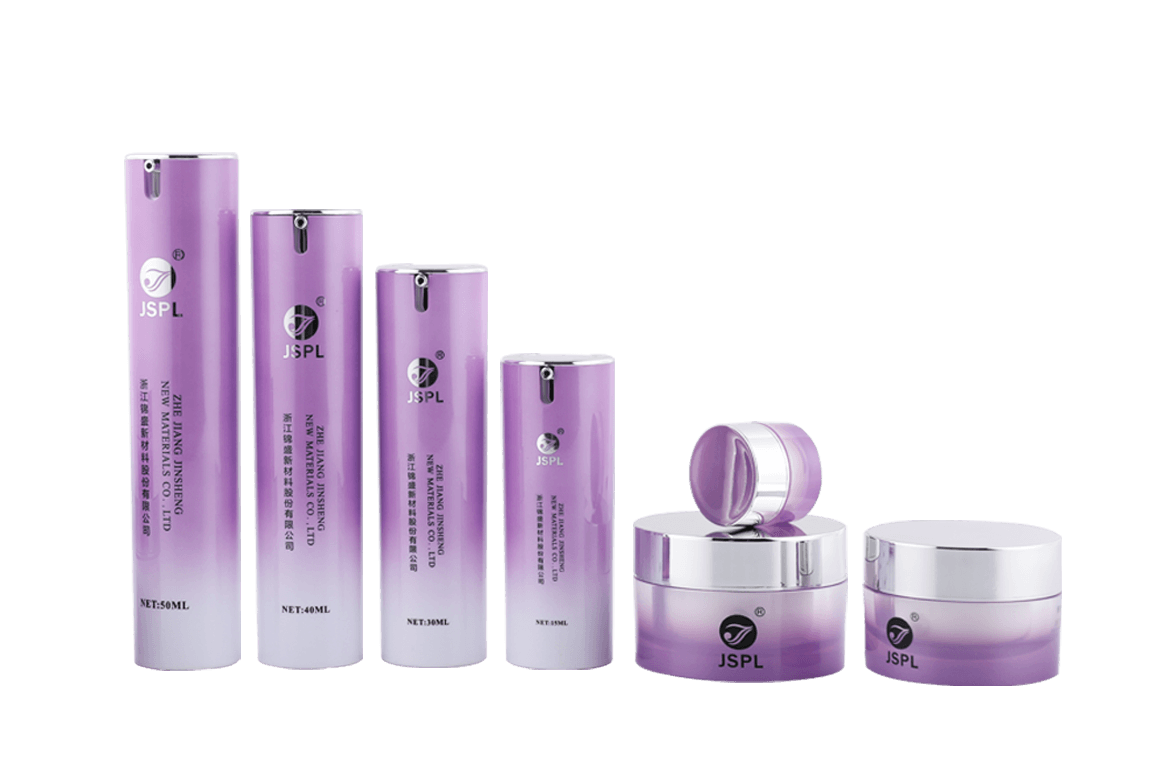
In the current global landscape of plastic reduction and circular economy, Mono-material packaging has transitioned from a trend to a mandatory standard for the chemical and personal care industries. Traditional Cosmetic Vacuum Bottle systems typically rely on multi-material assemblies involving stainless steel springs, rubber gaskets, POM pistons, and SAN or PP barrels. However, achieving a 100% Recyclable status by simplifying the entire assembly into a single material family, such as PP (Polypropylene) or PE (Polyethylene), presents unprecedented physical and mechanical hurdles for structural engineers.
Physical Property Reconstruction Without Metal Springs
In a standard vacuum pump engine, the stainless steel spring is the critical component for maintaining Rebound force. Moving to a Mono-material design requires the development of all-plastic tension or compression structures, such as plastic leaf springs or bellows systems.
Creep Resistance: Unlike metal, plastic polymers are highly susceptible to creep under prolonged stress. If a plastic spring remains in a compressed state during storage or shipping, the molecular chains undergo permanent displacement. This leads to a loss of elasticity, resulting in a pump that fails to return to its original position or provides a sluggish user experience.
Fatigue Life: A high-quality vacuum bottle must guarantee consistent performance for over 100 actuations. PP material has a significantly lower fatigue strength compared to metal when subjected to repeated deformation. Engineering the geometry to ensure the last drop of product is dispensed without mechanical failure is a primary barrier to entry.
Sealing Reliability Under High Precision Tolerances
The primary value of an Airless Bottle is its ability to isolate active ingredients like Vitamin C or Retinol from oxygen. In a mono-material setup, the piston and the inner bottle wall are often made of the same material family, which introduces severe sealing complexities.
Coefficient of Friction: When two components of the same material interact, the friction coefficient is typically high, leading to a "stiction" effect or jerky movement. While increasing the clearance can improve smoothness, it risks Leakage or air ingress. Engineers must find the "golden ratio" between smooth actuation and airtight integrity.
Thermal Expansion: Since all components share the same thermal expansion coefficient, they expand and contract in synchronization during extreme temperature fluctuations. During standard 48°C stability testing, maintaining micron-level fit to prevent Back-flow of air requires exceptional mold precision and cooling control during the Injection Molding process.
Kinetic Design and Dosage Control Balance
A sophisticated Cosmetic Vacuum Bottle must provide Accurate Dosage Control to ensure the consumer receives the exact amount of product intended by the brand.
Vacuum Pressure Management: All-plastic pump engines often struggle to establish negative pressure as efficiently as systems with metal ball valves. If the internal valve structure is not perfectly calibrated, the Prime counts (the number of presses needed before the first drop appears) will increase, negatively impacting the consumer's perception of product quality.
Viscosity Compatibility: For high-viscosity creams, mono-material structures often face a lack of "pushing power." Engineers must optimize the internal flow channels to reduce friction loss of the bulk material while ensuring the plastic valve can snap shut quickly enough to prevent oxidation of the remaining product.
Material Modification and Manufacturing Complexity
Achieving a Mono-material solution does not imply using standard off-the-shelf PP resins. It requires a deep understanding of polymer science.
Material Modification: To compensate for the inherent lack of elasticity in plastic springs, specific elastomers are often compounded into the PP base. However, these additives must remain compatible with PCR (Post-Consumer Recycled) streams to ensure the final product is truly recyclable and meets global certifications.
Injection Molding Challenges: The complexity of an all-plastic pump core involves intricate undercuts, thin-walled ribs, and precision gates. Any slight deviation in the molding cycle can result in "sink marks" or warping, which compromises the vacuum seal. This necessitates advanced hot runner systems and real-time pressure monitoring during production.